
Transition management in Italy: the specificities of the market
Transition management in Italy: understanding the specificities of an entrepreneurial market
The Italian market has economic and entrepreneurial characteristics that directly shape transition management practices. Between large international companies and numerous family-owned SMEs, the Italian economy is built on organisations with specific ways of operating and specific needs.
To effectively support these companies through their transformations, transition managers need to understand these particularities and adapt their approach to the realities of the local market.
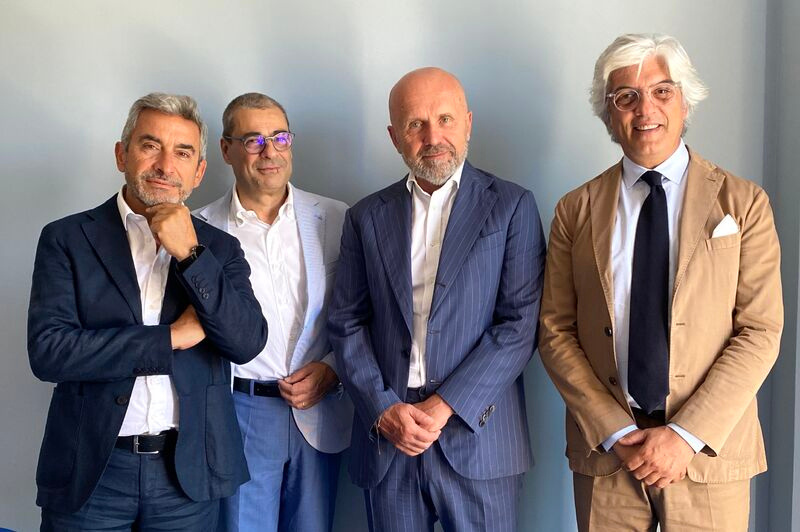
Giorgio Magnaghi, Partner Italy, and Giandomenico Rivetti, Managing Partner Italy, at AXCEL Partners share their view of the Italian market, its needs and its development prospects.
An economy shaped by SMEs and family businesses
The Italian economy stands out for the major role played by small and medium-sized enterprises. These companies are a true pillar of the national economy and are often owned by entrepreneurs or families who also keep an operational role in their day-to-day management.
This structure calls for a specific approach to transition management. Beyond technical and managerial skills, professionals must be able to adapt to the company’s culture, its decision-making processes and the close relationship between owners and operational teams.
The format of assignments must also take these specificities into account. Depending on the company’s needs, some assignments may be carried out part-time or on a fractional management basis.
Strong demand in operational and financial functions
In Italy, companies regularly call on transition managers to address financial and operational challenges. Several areas account for a large share of demand:
- Finance and control: supporting financial management and organisational change
- Operations: strengthening performance and ensuring business continuity
- Supply chain and logistics: optimising flows and operational processes, reshoring
- Procurement and purchasing: improving the management of resources and suppliers
- Business development: supporting commercial growth and identifying new growth drivers
- Digital transformation: adapting the company’s business model, which has been successful in the market to date, to the new opportunities created by the digital and cultural transformation that AI is bringing, both in customer relations and within internal processes
International expansion is also a key challenge for many Italian companies. Developing exports and entering new markets require specific skills and a solid understanding of international environments.
Italian managers are well equipped to support these ambitions, thanks in particular to their experience of foreign markets and their ability to work in multicultural contexts.
A transition management market still taking shape
Today, the Italian market includes a number of players specialising in transition management. However, they do not all offer the same approach.
A key distinction lies between firms (or better providers) with a background in recruitment and headhunting, whose main objective is to meet a temporary organizational need, and those built on genuine managerial experience.
This difference matters. Transition management is not simply about temporarily filling a vacant position. Above all, it means bringing in an experienced manager who can take on responsibility, lead teams and drive a transformation within the company.
Managers may also choose to work as part of a team of professionals rather than relying solely on providers.
In addition, word of mouth remains a common practice in the Italian market. While personal recommendations play an important role in business relationships, this approach can have its limits when the selection and management of assignments are not based on a structured process.
The professionalisation of the market and the development of more structured approaches are therefore key areas of improvement for the sector.
Local expertise is essential in an international environment
Transition management practices vary from country to country, depending on the characteristics of each economy. In Italy, the weight of family-owned SMEs, the close link between owners and operations, and companies’ international ambitions all require an in-depth understanding of the market.
For companies, choosing a transition manager must therefore go beyond identifying an available skill set. It depends on the professional’s ability to understand an environment, integrate into an organisation and respond concretely to its challenges.
At AXCEL Partners, our international presence is built on local expertise and an in-depth knowledge of the markets in which we operate.
This proximity to the economic realities of each country enables us to support companies as they evolve, by mobilising the managerial skills that match their needs.
Understanding local specificities while keeping an international perspective: a key to supporting companies’ transformations over the long term.
Many thanks to Giorgio Magnaghi and Giandomenico Rivetti for sharing their insights on the Italian transition management market.
Are you supporting a company in Italy or considering a transition assignment in this market? The AXCEL Partners Italia team will be delighted to discuss it with you.